Hands-Free Drying: Ergonomics, Technique, and Who It Actually Helps
Do a small experiment tomorrow morning. Hold your hair dryer in position (elbow up, nozzle at head height) and just watch the clock. No drying, no styling. Most people's shoulder starts complaining before ninety seconds. Now remember that a full blow-dry on medium heat, done properly, takes eight to twelve minutes.
We talk endlessly about what drying does to hair. Almost nobody talks about what it does to the person.
The physics of a tired arm
A typical dryer weighs 400 to 700 grams. That sounds trivial: it's a bottle of water. But biomechanics doesn't care what something weighs in your hand at your side; it cares about leverage. Hold that bottle at the end of an outstretched, raised arm and the effective load on your shoulder multiplies several times over. Physiotherapists have a name for the general problem: sustained overhead work, and it's classified as a risk factor in occupational health for good reason. Hairdressers, people who do this professionally, report shoulder and neck complaints at some of the highest rates of any trade.
You're doing a lighter version of their job every morning, with your non-dominant hand doing detail work at the same time.

What fatigue does to your hair (yes, your hair)
Here's the loop nobody notices. Around minute four or five, your deltoid starts to burn. Your body quietly solves the problem the only way it can: the arm drops a little, drifts a little, comes closer to your head. The 15 cm safe distance becomes 8, then 5. The steady sweeping motion becomes parking, because sweeping costs energy you're out of. Every rule of good drying technique fails at once, not because you forgot them, but because your shoulder overruled them.
Rushed sessions have the same signature: high heat instead of medium (to finish before the arm gives out), skipped sections, no cool shot. Arm fatigue is the upstream cause of half the heat damage we described in the temperature guide.
When it's more than tiredness
For a lot of people, this isn't about comfort at all. If you live with arthritis, a frozen shoulder, a rotator cuff injury, tremor, chronic fatigue, or you're recovering from surgery (or you simply have long, thick hair and a body that's done carrying things overhead), the standard hair dryer is quietly one of the most hostile objects in the house. Ten minutes of elevated, repetitive, precision arm work is the exact motion many physiotherapy plans tell you to avoid.
The beauty industry's usual answer is "dry less often." Which is not an answer. Clean, styled hair is not a luxury anyone should have to negotiate with their joints for.
Taking the arm out of the equation
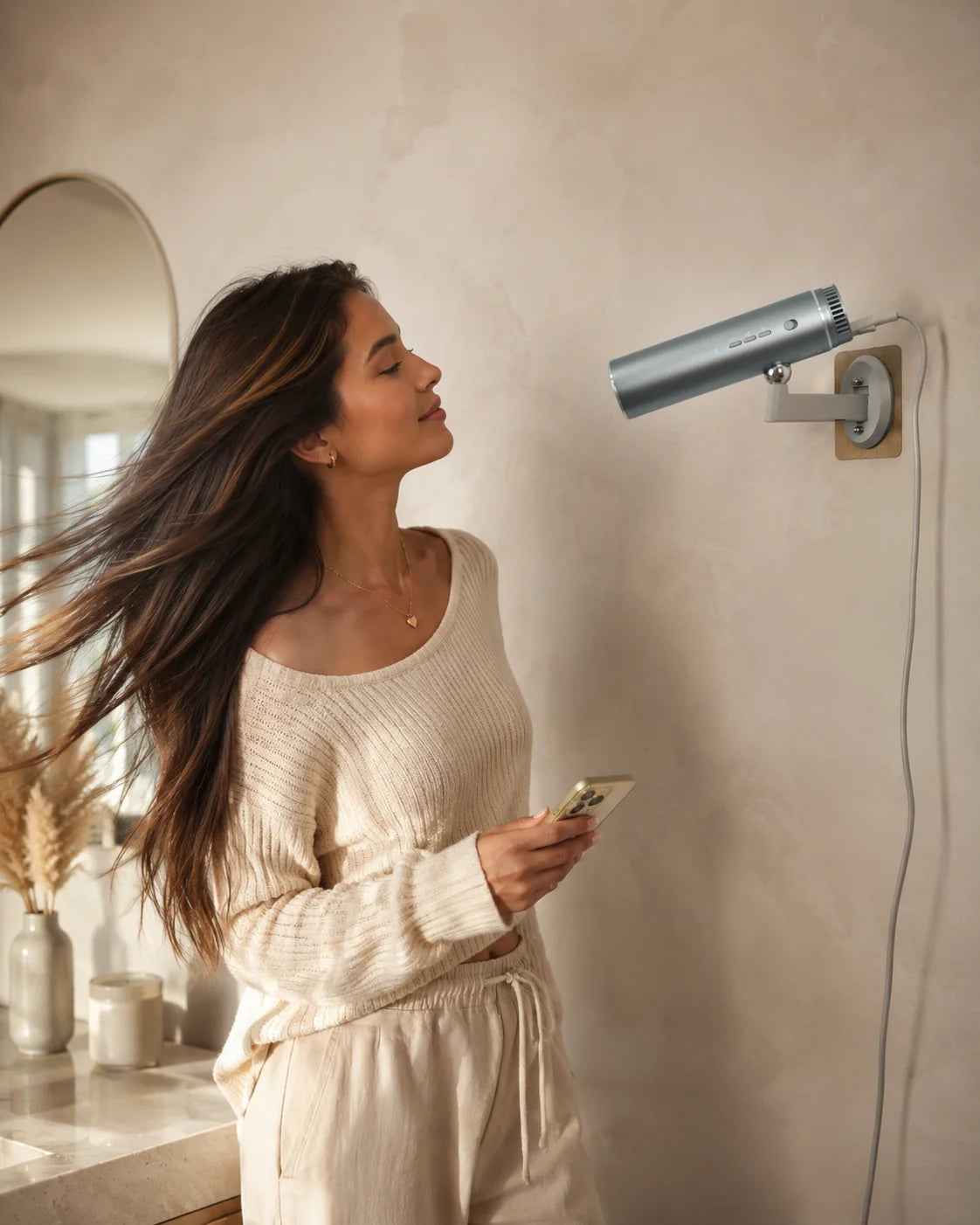
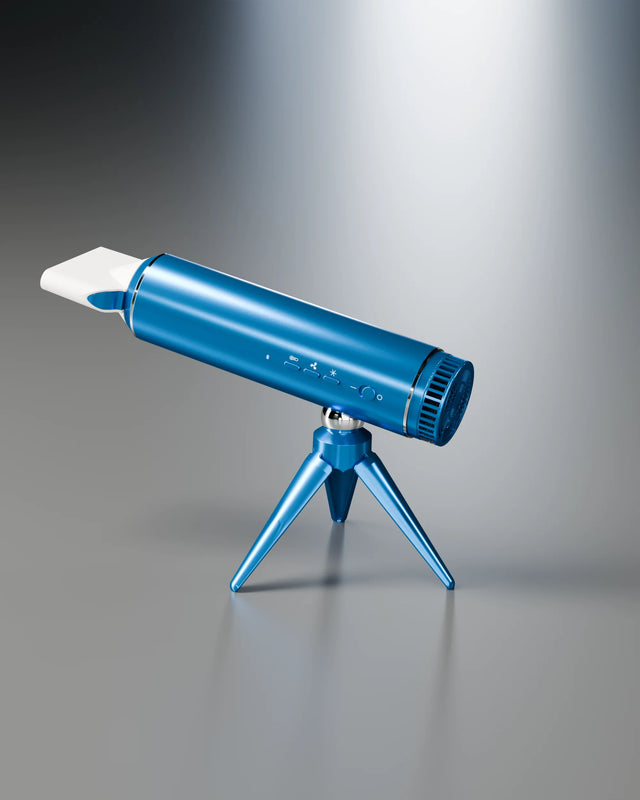
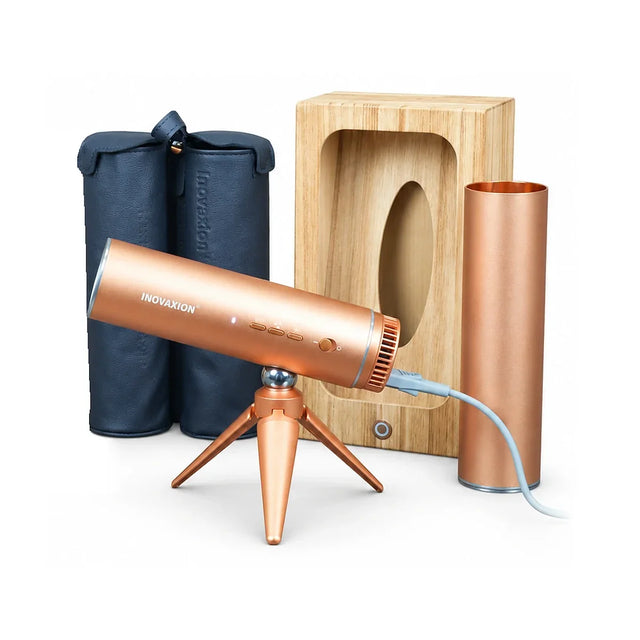
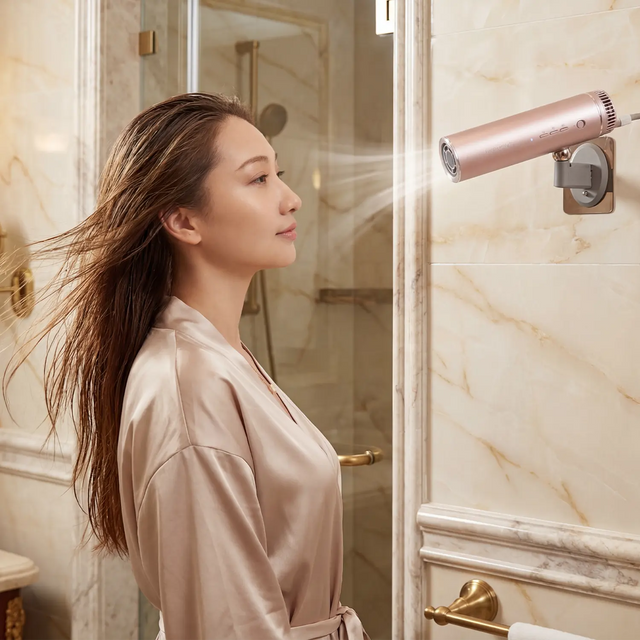
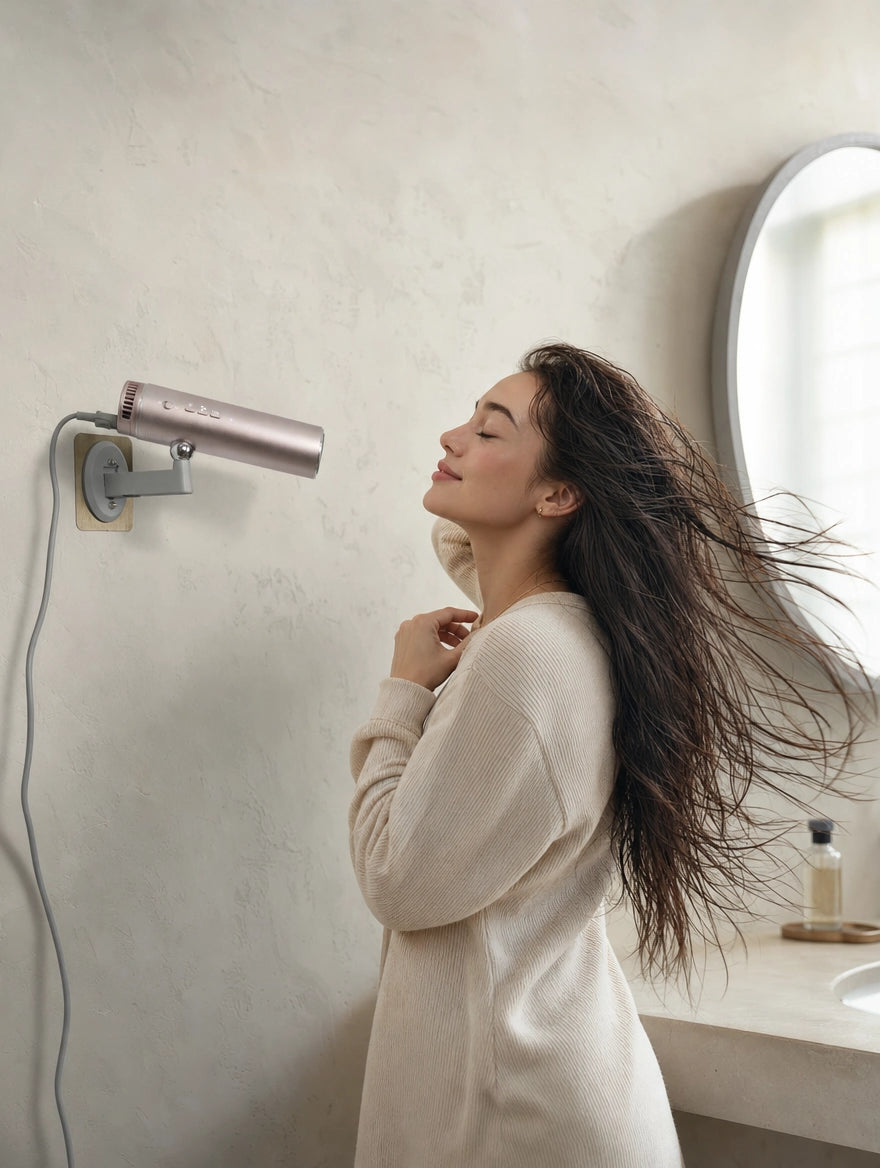
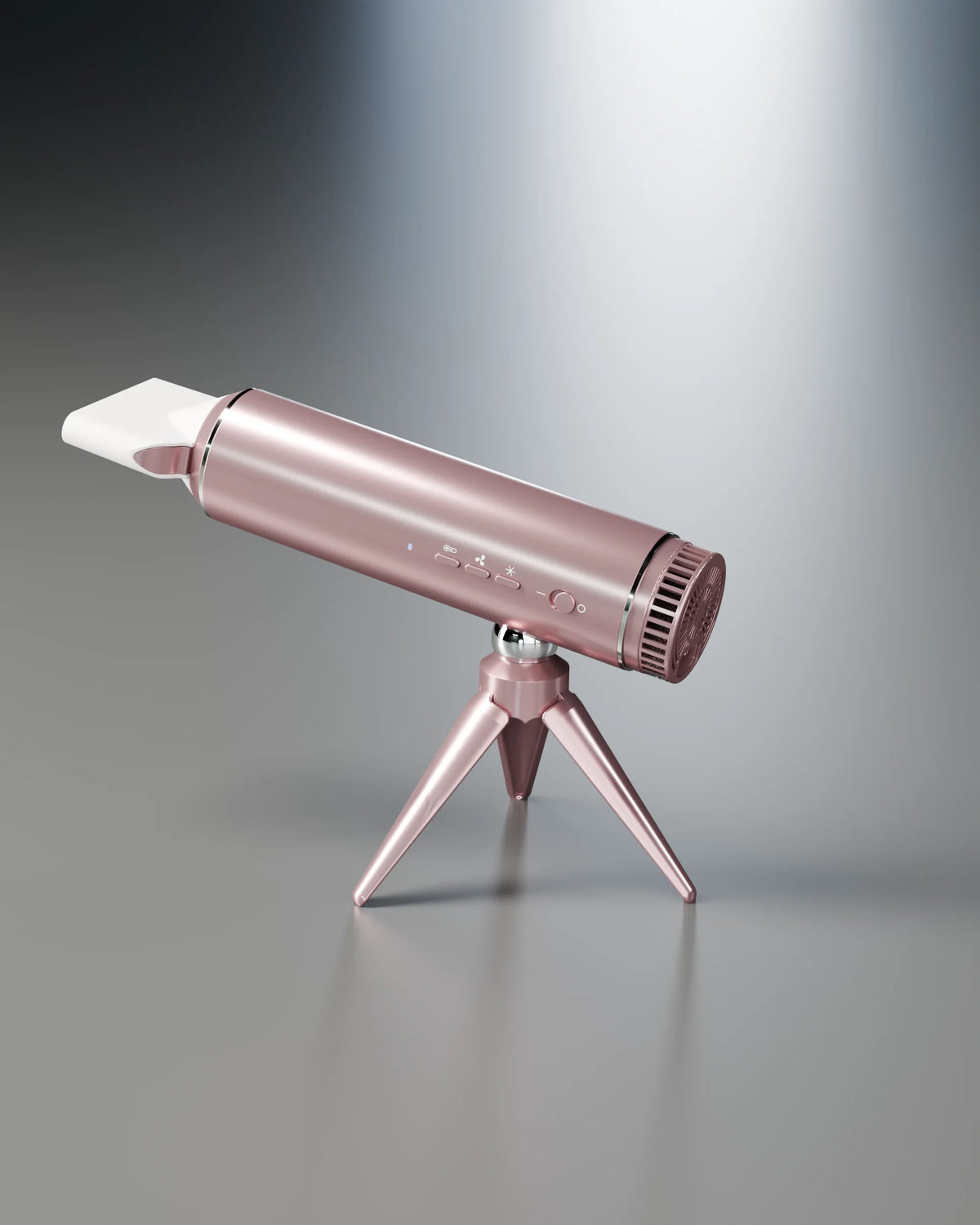
The fix is almost embarrassingly simple: stop holding the dryer. Mount it. A dryer fixed on an adjustable stand (the way we use the LeLunar HandsFreeDryer on its magnetic tripod) turns the whole activity inside out:
The load disappears. Zero grams held overhead for zero minutes. You sit or stand comfortably and turn your head through the airflow, the way you'd turn your face to the sun.
The technique fixes itself. Distance is set once and never drifts. The angle stays pointed down the strand. Medium heat stops feeling slow because nothing hurts while you wait.
Both hands come back. Sectioning, tension, a round brush: the two-handed skills that separate salon results from home results are suddenly available. Or keep your hands in your lap and just let it run. Both are wins.
It meets you where you are. Seated at a desk, in a wheelchair, on the edge of the bath: an adjustable stand works at whatever height you are.

Comfort is a technique multiplier
Here's the reframe we'd offer anyone who thinks hands-free drying is about laziness: every guide on this site (distance, motion, angle, sectioning, cool finish) assumes a steady dryer and free hands. For most people, most mornings, that assumption is false. Fix the assumption and the rest of the technique stops being aspirational and starts being automatic.
Your hair deserves the ten good minutes. So does your shoulder.

%20and%20just%20watch%20the%20clock.%20No%20drying,%20no%20styling.%20Most%20people's%20shoulder%20starts%20complaining...)