How Hot Is Too Hot? A Temperature Guide for Hair
Your hair can't feel pain. That sounds like a blessing until you realize what it means: hair gives you no warning while it's being damaged. By the time you can see heat damage (dullness, snapping, ends that split faster than you can trim them), the harm happened weeks ago, silently, a few degrees at a time.
So instead of guessing, let's put actual numbers on it. This is the temperature map of your hair.
Up to about 60°C: the comfort zone
Warm airflow in this range evaporates water without meaningfully touching the hair's structure. Most dryers on low or medium, held at a sensible distance, land here. You could dry your hair this way daily for years. The catch is patience: lower heat means longer drying, and that's exactly where most people give up and crank the dial.
Around 100°C: the steam line
Here's the number that should genuinely worry you. Water boils at 100°C, including the water inside your hair. When a hot nozzle sits close to a wet strand, moisture trapped in the cortex can flash into steam and expand violently, punching microscopic voids in the fiber. Researchers call it bubble hair, and it's exactly what it sounds like: hollow, brittle sections that snap under a brush. It's not gradual wear: it's a small structural explosion, and it's permanent.
150–180°C: protein territory
Keratin, the protein your hair is made of, starts to denature under sustained heat in this range: the internal bonds that give hair its spring literally cook, the way egg white turns solid in a pan. Flat irons and curling wands live here, which is why they come with temperature dials and why stylists use them on dry hair only, in single smooth passes. A dryer shouldn't be delivering these temperatures to your hair. Ever. And yet.
How a 60°C dryer becomes a 120°C dryer
Here's the trap: dryer temperature isn't a fixed number. It's a function of distance. Air leaving the nozzle cools rapidly as it travels: a dryer that delivers a comfortable 55°C at fifteen centimeters can deliver double that at two. And what happens over ten minutes of holding a one-kilo dryer overhead? Your arm sinks. The nozzle drifts closer. The temperature at your hair's surface climbs without you changing a single setting.
Nobody decides to burn their hair. Their shoulder decides for them, around minute six.

The rules that keep you in the safe zone
Medium is the new high. The time you save on high heat is a couple of minutes. The damage compounds forever. Medium heat with strong airflow dries almost as fast: it's the airflow doing most of the work anyway.
Distance is a heat setting. A hand-span of space (about 15 cm) is worth more than any button on the handle. If you can feel the air as hot rather than warm on your scalp, you're too close.
Motion is protection. Heat damage needs time on target. Keep the airflow sweeping and no single spot ever accumulates enough heat to cross a threshold.
Wet hair is soft hair. Above roughly 80% saturation, hair is at its weakest. Blot with a towel first, let it get to properly damp, and you shorten the risky window dramatically.
Finish cold. The cool shot isn't a gimmick: it closes the cuticle and locks the style. Cold air cannot hurt your hair. It's the only button on the dryer with no downside.
The steadiness problem, solved without willpower
Notice that every rule above is really the same rule: control the temperature at the hair's surface, consistently, for the whole session. And the reason people fail isn't ignorance, it's fatigue. Consistency for ten minutes with a raised arm is a physical feat.
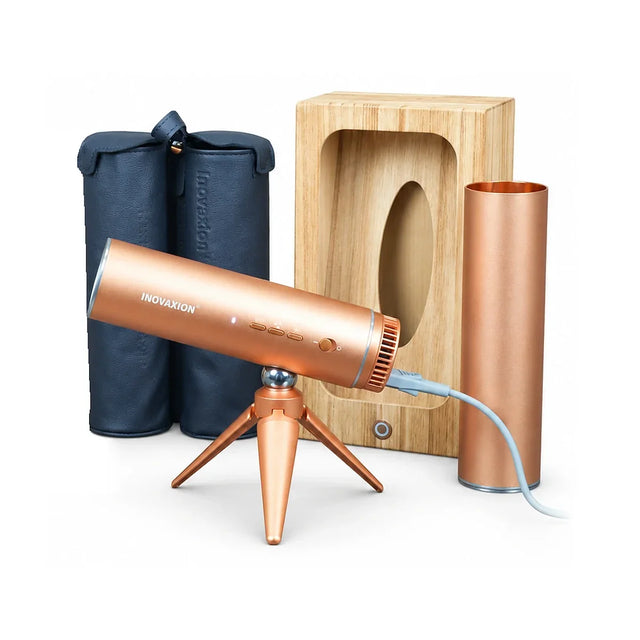
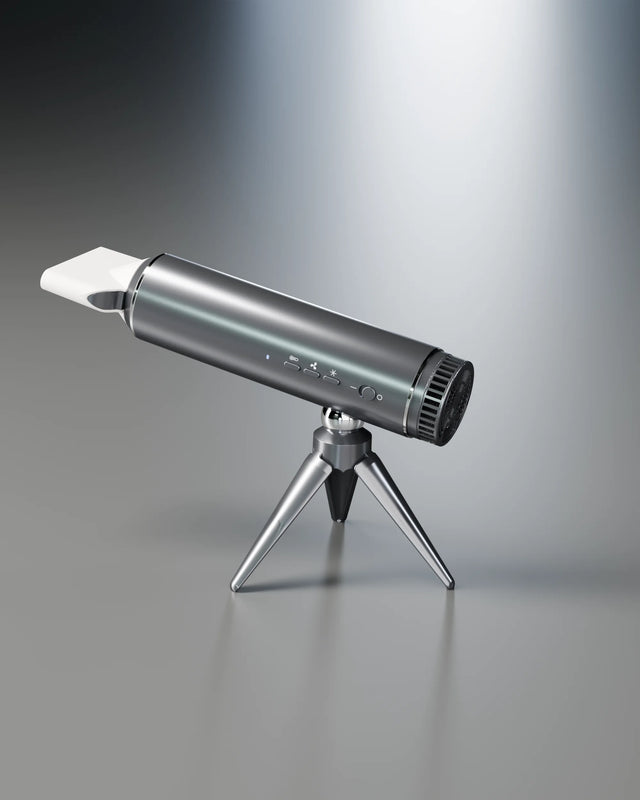
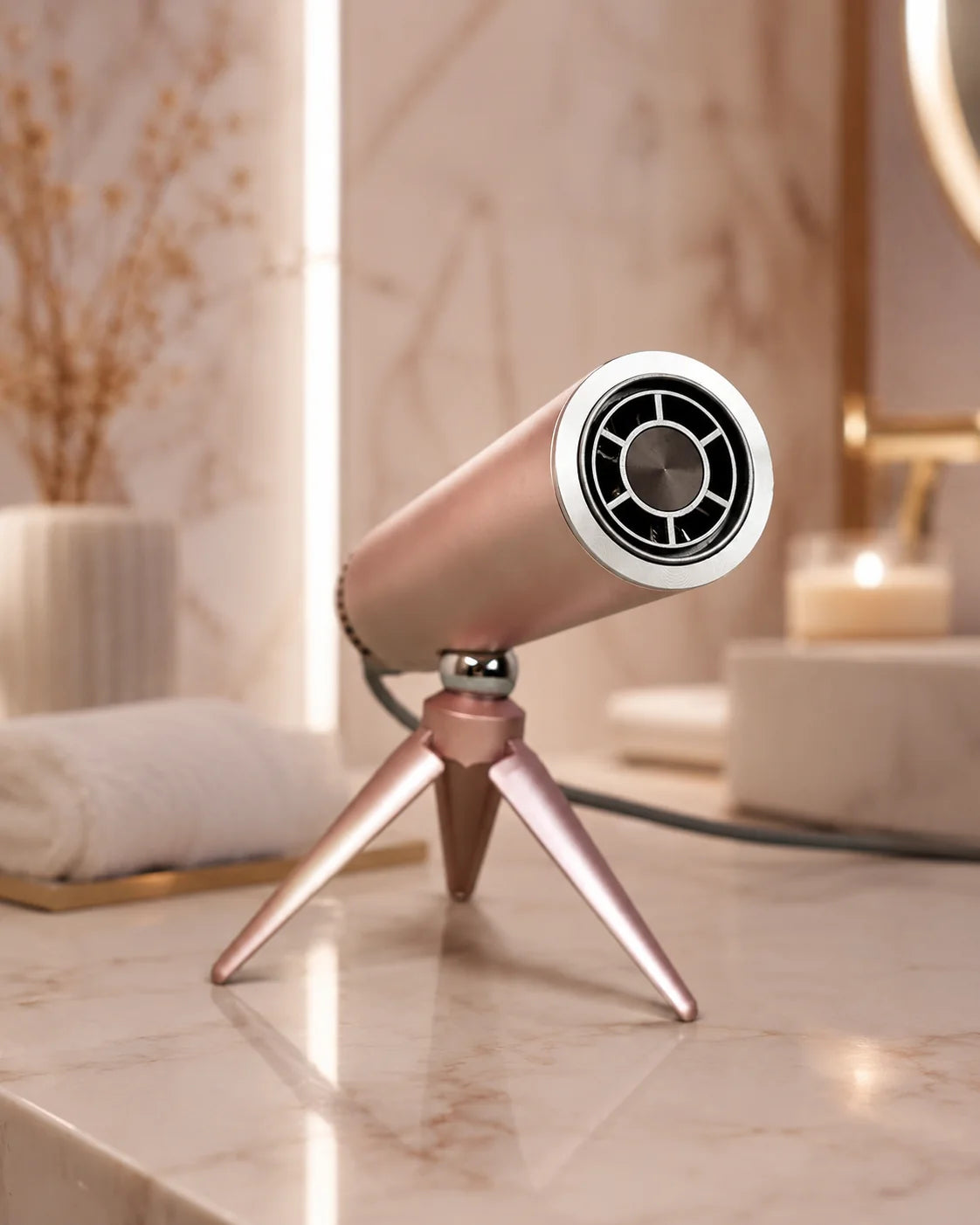
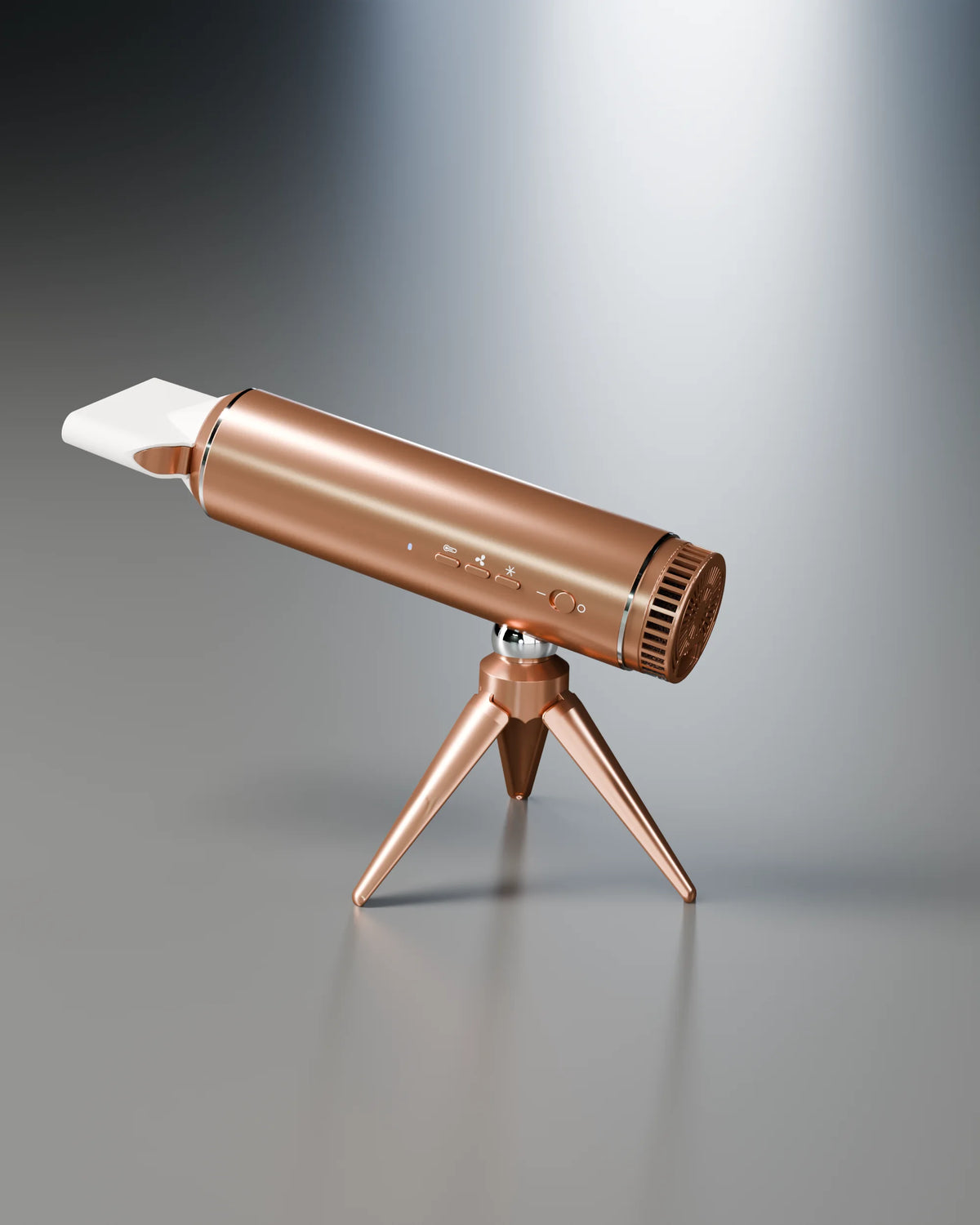
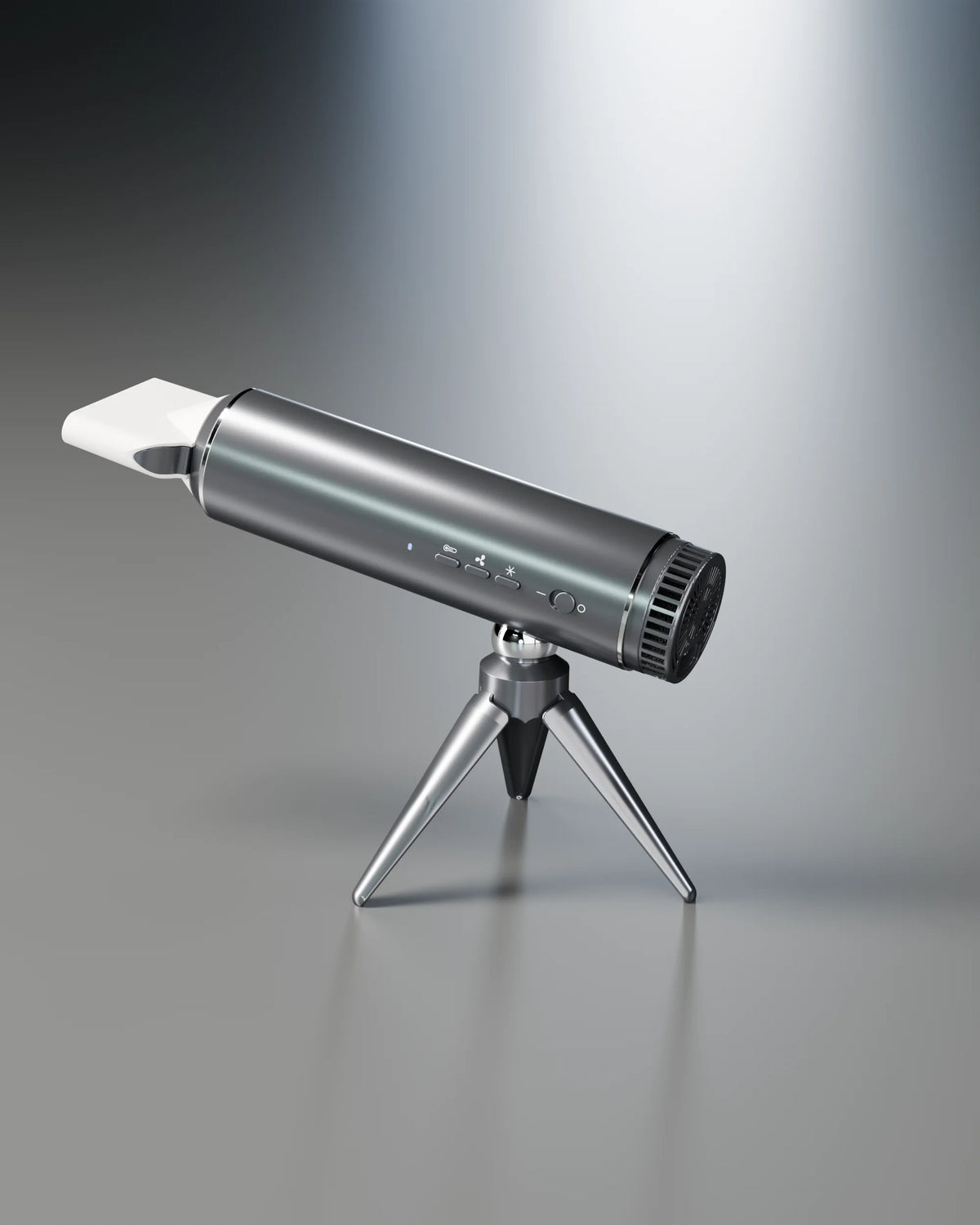
That's the actual argument for taking the dryer out of your hand. We test these guides with the LeLunar HandsFreeDryer, mounted on its tripod at a fixed 15 cm: the distance never drifts, the angle never sags, and medium heat stays genuinely medium from the first minute to the last. The temperature discipline that takes a stylist years to build into their arm comes free with a stand.
Your hair can't feel pain. So the kindest thing you can do is make sure there's never anything to feel.